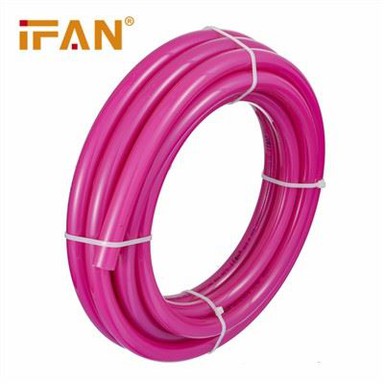
Safety Considerations of PPR Fittings in High-Rise Buildings
Apr 15, 2025
PPR (Polypropylene Random Copolymer) fittings have become increasingly prevalent in high-rise building projects due to their excellent material properties and installation advantages. In vertical construction exceeding 50 meters, plumbing systems face unique challenges including significant hydrostatic pressure, thermal expansion stresses, and fire safety requirements. PPR pipes address these concerns through their inherent chemical stability, with a molecular structure that maintains integrity under pressures up to 2.5MPa at 20℃.
The material's thermal characteristics prove particularly valuable in high-rises, with a linear expansion coefficient of 0.15 mm/m℃ - approximately ten times lower than standard PVC alternatives. Modern engineering solutions incorporate expansion loops and proper support spacing (typically 1-1.5m intervals) to accommodate vertical movement in tall structures. Recent advancements in PPR technology have yielded specialized formulations with enhanced pressure ratings (PN25 classification) specifically designed for skyscraper applications.
High-rise plumbing systems experience dramatic pressure variations across different elevation zones. PPR demonstrates exceptional performance in these conditions:
: Maintains PN20 classification (20 bar operating pressure) across temperature fluctuations from 0℃ to 70℃
: Laboratory tests show burst thresholds exceeding 60 bar at ambient temperatures
: The material's elasticity (Young's modulus of 800 MPa) effectively dampens pressure surges
Engineering protocols for skyscrapers typically implement pressure-reducing valves every 15-20 floors, with PPR's pressure tolerance allowing for fewer zoning requirements than metal alternatives. The material's creep resistance ensures long-term dimensional stability under continuous load, with deformation rates below 1% after 50 years of service at design pressures.

PPR's behavior in fire scenarios meets stringent high-rise safety standards through multiple protective mechanisms:
Self-Extinguishing Properties: Achieves B1 fire rating according to DIN 4102, with oxygen index exceeding 18%
: Generates less than 15% smoke density compared to PVC alternatives
Non-Dripping Characteristics
Modern high-rise installations combine PPR with:
Compartmentalization every 5 floors
These measures help PPR systems comply with International Building Code (IBC) Chapter 7 requirements for vertical pipe chases in high-occupancy structures.
Earthquake-resistant design principles favor PPR in seismic zones due to:
: Can withstand building sway up to 2.5% interstory drift without failure
: Heat-fused joints maintain 95% of pipe strength, outperforming threaded metal alternatives
: Reduces transmission of mechanical vibrations by 40% compared to steel
Additional clearance (minimum 25mm) around penetrations
These features contributed to PPR systems surviving 2011 Christchurch earthquakes (6.3 magnitude) with zero reported failures in high-rise applications.

Long-Term Durability and Maintenance Advantages
: Outer layer formulations maintain 90% tensile strength after 10,000 hours of accelerated weathering
: Unaffected by water treatment chemicals including chlorine up to 5ppm concentration
: Smooth inner surface (Ra 0.007μm) prevents biofilm accumulation
60% lower repair frequency than galvanized steel systems
80% reduction in pipe replacement costs over 30-year lifespan
Conclusion: PPR as the Future of High-Rise Plumbing
The comprehensive safety profile of PPR fittings makes them ideal for modern skyscraper construction. From pressure management to seismic performance, PPR outperforms traditional materials while reducing lifetime maintenance costs. As building codes continue evolving, PPR technology adapts through improved fire ratings (now achieving Class A in some formulations) and higher pressure capabilities.
For structural engineers and MEP designers, PPR represents not just a viable alternative, but the new benchmark for safe, reliable vertical plumbing systems in 21st century high-rises. Current research into nano-composite PPR formulations promises even greater safety margins for next-generation supertall structures exceeding 100 floors.